More than a lock replacement
Access Control Retrofit Solutions
From comprehensive door surveys and specialist fire testing to bespoke remediation and detailed documentation, TLJ helps you upgrade existing access control with confidence.

The challenge with existing doors
Refurbishment Starts with Understanding.
Replacing an electronic lock is one thing. Understanding the door it's being fitted to is another.
In an existing building, every door has its own history. Previous lock installations can leave different apertures, door constructions vary, and the suitability of each opening needs to be carefully assessed before any upgrade is recommended.
That's why TLJ approaches refurbishment differently. Rather than starting with a replacement product, we start by understanding what's already there — so the right solution can be developed around the existing doors, the building and its operational requirements.
From assessment to installation
A Considered Approach at Every Stage.
Our refurbishment approach combines detailed surveys, independent testing, bespoke remediation and comprehensive documentation to deliver access control upgrades built around the conditions of your existing building.
Survey Before Specification
We assess existing doors, legacy hardware and previous modifications before recommending a solution tailored to your building.
Retrofit-Specific Fire Testing
Independent testing helps inform our refurbishment methods, taking existing apertures and door conditions into account.
Tailored In-House Remediation
Our in-house CNC capability enables bespoke components to be manufactured around the requirements of individual doors.
Documented from Start to Finish
Detailed photographic records capture the condition of each door and the remedial work undertaken during installation.
A closer look at every door
Before We Quote, We Investigate.
Replacing an electronic lock is one thing. Understanding the door it's being fitted to is another.
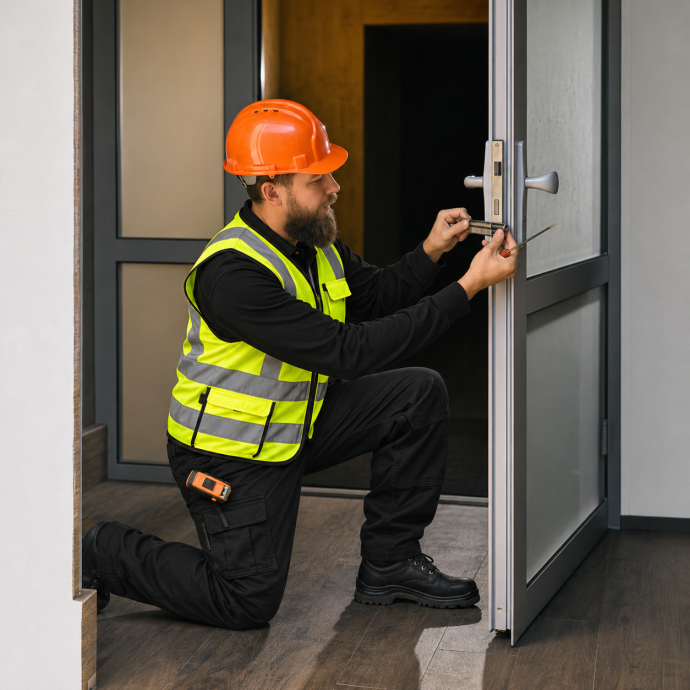
That's why TLJ carries out a comprehensive site survey before preparing a refurbishment proposal, assessing existing doors, previous installations and apertures.
Those findings shape our proposed solution, helping identify potential challenges before installation begins and giving you a clearer understanding of what's required from the outset.
Independently tested refurbishment methods
New Door Tests Don't Tell the Whole Story.
The challenge
Fire testing on new, unmodified doors doesn't necessarily reflect refurbishment conditions. Previous lock installations can leave apertures and alterations that must be considered when fitting replacement hardware.
TLJ's testing approach
Using records of existing door apertures, TLJ has independently tested its remediation methods and replacement locking hardware across different door cores, using the largest aperture identified in our records.
What this means
This provides evidence informed by real refurbishment conditions, helping us assess existing doors and select appropriate remediation methods rather than relying solely on tests carried out on new doors.
Independently tested. Informed by real refurbishment conditions.

Bespoke in-house remediation
Made to Fit What's Already There.
Different electronic locks require different door preparations. When replacing an existing system, previous installations often leave apertures and fixing points that don't align with the new hardware.
With our in-house CNC machine, TLJ can manufacture precision-made wooden dowels, bespoke infill blocks and other components tailored to individual doors and their existing openings.
This gives us greater flexibility to address the conditions found on site, helping retain suitable existing doors, while ensuring our refurbishment methods meet fire safety requirements.
The golden thread of fire safety
Every Door. Every Detail. Documented.
When refurbishing existing fire doors, what happens behind the lock matters just as much as the finished installation.
That's why TLJ takes a comprehensive, door-by-door approach to surveying, remediation and photographic documentation. From the condition of the original apertures to the completed installation, we create a detailed record of the work undertaken, giving building owners and operators greater visibility, accountability and confidence in their fire door refurbishment.
Before preparing a refurbishment quotation, TLJ carries out a detailed survey of the existing doors and locking arrangements. Our engineers assess each door's condition, identify legacy hardware and consider existing apertures, previous modifications and potential remediation requirements.
The findings inform the proposed solution and provide the client with a clearer understanding of the work required before proceeding.
Before installation begins, TLJ produces a detailed report documenting every individual door. Photographs record the existing locking hardware and apertures revealed beneath the legacy locks, alongside the remedial work proposed for each door.
This gives the client a clear, door-by-door record of the starting conditions and the work planned before refurbishment takes place.
Following installation, the client receives a comprehensive photographic record of the remedial work completed on every individual door.
Images document each stage, from the removal of the existing lock and exposure of the original apertures, through any new door preparations and the installation of bespoke infill components and specified fire-resistant materials, to the completed replacement lock and functionality checks.
The result is a traceable record of how each door was refurbished, not simply a photograph of the finished installation.
Together, these documents create a detailed record of each door's condition, the remediation proposed and the work ultimately completed.
This supports the golden thread of fire safety information, giving building owners and operators valuable evidence for ongoing fire door management, future inspections and assessments. It also provides greater transparency and accountability around the work undertaken, helping protect the people who rely on those doors every day.
Specialist in-house installation
Expertise Behind Every Install.
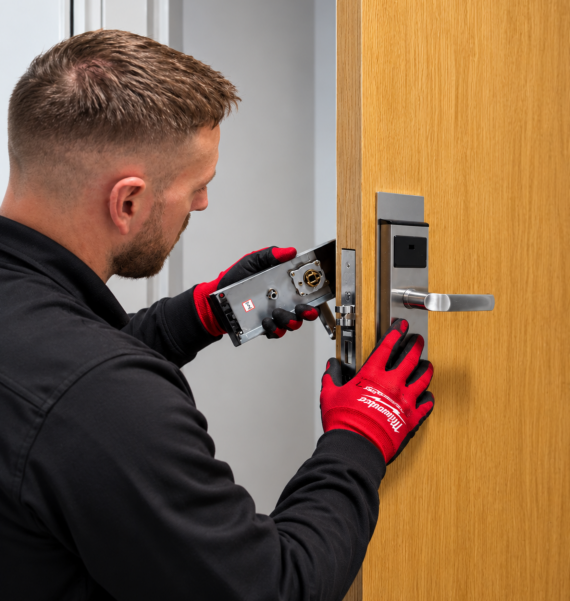
Our specially trained, in-house engineers carry out the remedial work and installation, ensuring each door receives the attention its individual condition requires.
Working to the agreed refurbishment methods, they address legacy apertures, prepare doors for replacement hardware and complete each installation with careful consideration for fire door integrity.

Refurbishment around real life
Your Building Doesn't Stop. Neither Should You.
Refurbishing access control in an occupied building requires more than technical expertise. Residents and guests still need to come and go, and everyday operations need to continue.
That's why TLJ plans refurbishment work around the people using your building, with a considered approach to installation, shared spaces and minimising disruption.
Containing dust. Minimising disruption.
Our temporary dust-containment enclosures create a barrier around individual doorways during remedial work, helping capture dust and debris before it spreads into occupied spaces.
The value of a considered approach
More Value from Your Existing Building.
A well-planned access control refurbishment can help protect budgets, reduce unnecessary waste and disruption, and provide a clearer record of the work undertaken.
Avoid Unnecessary Replacement Costs
Retain suitable existing doors rather than automatically replacing them.
Reduce Material Waste
Make better use of existing building materials wherever refurbishment is appropriate.
Consider Occupied Buildings
Plan access control upgrades with residents and day-to-day operations in mind.
Maintain a Clear Paper Trail
Keep detailed records of the work completed on each individual door.

 5 minute read
Calcott 10
TLJ upgraded access control across 733 rooms at Calcott 10 in Coventry, replacing outdated locks while the student accommodation remained occupied.
Working closely with the on-site team, the installation was completed block by block with minimal disruption to residents.
Let's talk refurbishment
Planning an access control upgrade?
From individual buildings to entire portfolios, TLJ can help you explore a refurbishment approach that considers your existing doors, fire safety requirements and day-to-day operations.